On this page I am going to cover 7 things you should watch for when buying used panels.
Used panels can be a great investment, but only if you get what you paid for. Don’t let anyone convince you its OK to say “These are used panels, what did you expect”. If the seller told you about the issues upfront, then that’s different. Panels in the conditions covered are not in good shape and are potentially dangerous.
These issues include: 1. Cracked Backsheets and Corrosion 2. Burnt Busbars 3. Snail trailed cells 4. Burnt Cells 5. Cut wires 6. Smashed panels 7. Scratched/Damaged Plastic on back of panel
Scroll to bottom of the page for a Youtube video we made that covers the issues shown here.
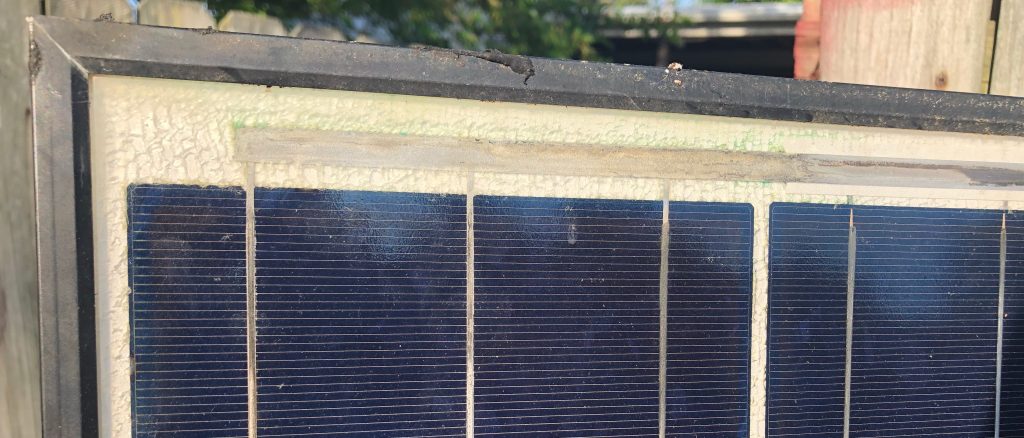
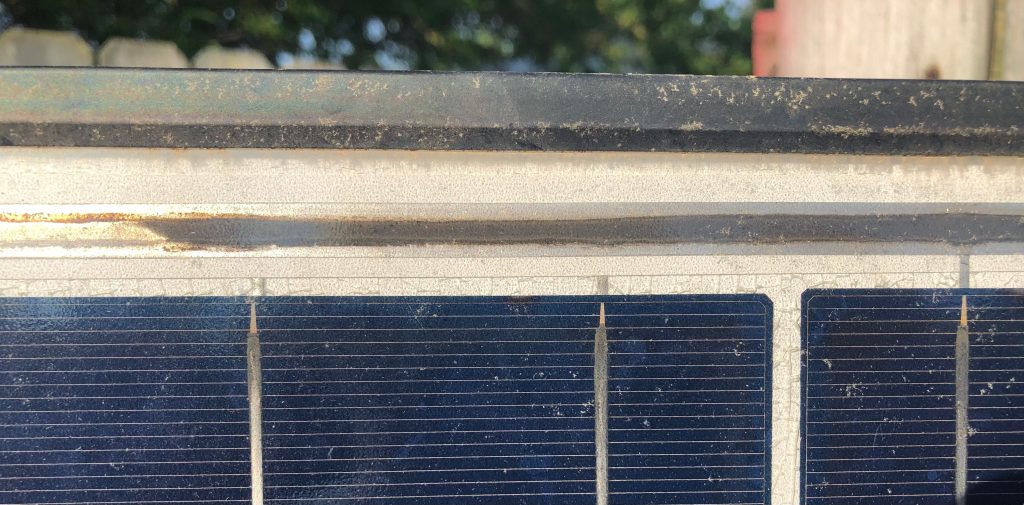
1. Cracked Backsheets and Corrosion around Busbars
Solar panel components are exposed to intense UV radiation and temperature variations every day.
Cracked backsheets are signs of poor component selection and can cause water vapor to enter module laminate to damage solar cells.
2. Burnt Busbars
Burnt busbars are a sign that too much power has been flowing through ough the panel and that it may have overheated or over volted.
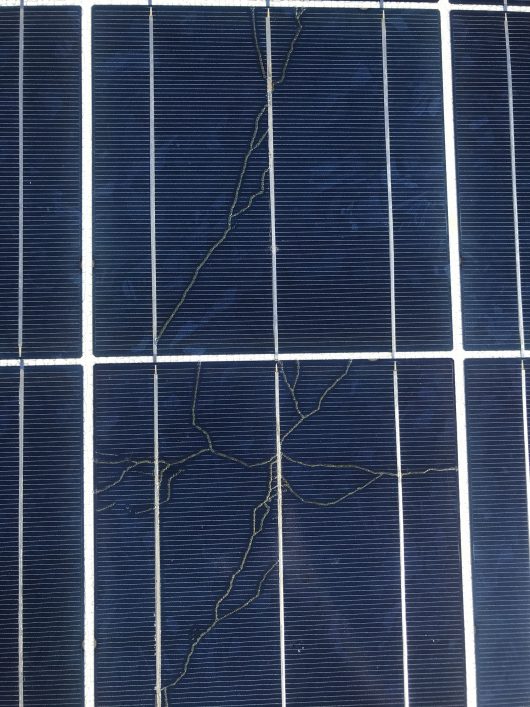
3. Snail trailed cells
When the underlying solar cells are broken, cells can continue to generate electric current along the cracks, causing localised heat that breakdown the cell surface and EVA.
If water vapor is also present, discoloured snail trails are formed along the microcracks to not only reduce energy production but also compromise appearance.
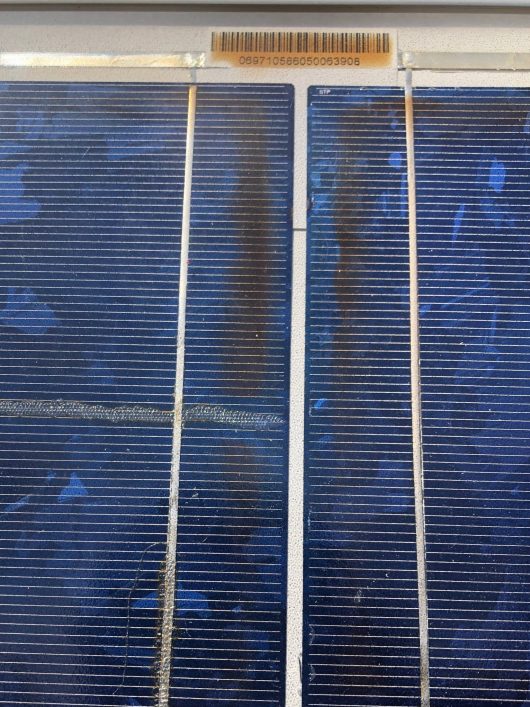
4. Burnt Cells
Solar cells are designed to generate an electric current when the sunlight shines upon them.
When the current flows through the solar cell strings within panels, the resistance in cells converts the current into heat losses.
Any imperfection in solar cells, such as cracks, poorly soldered joints, and mismatches, lead to higher resistance and become hot spots in the long run.
The long term effects of hot spots include burnt marks that degrade solar cells and backsheets and may eventually lead to fires if left unchecked.
5. Cut wires
Cut wires are caused by lazy workers while the panels are being uninstalled.
Instead of unplugging the wires, lazy workers will just cut the wires and move on.
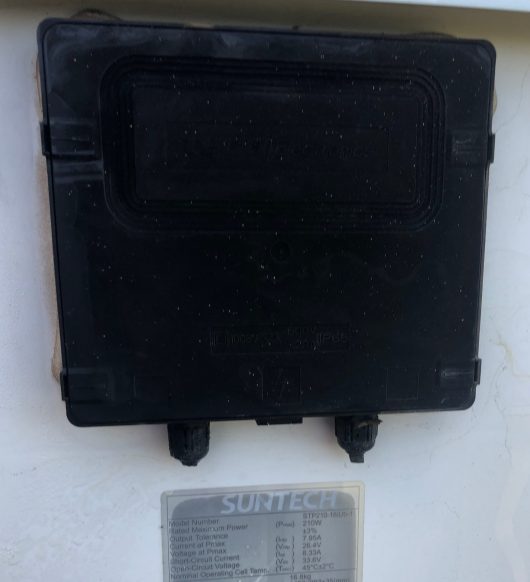
These panels will in turn be shipped out to customers who are stuck with a panel that can’t be plugged in
If enough wire is left, you may be able to put a new connector on. If the wires are cut too short, you will have to see if it is possible to open the junction box and replace the wire all together.
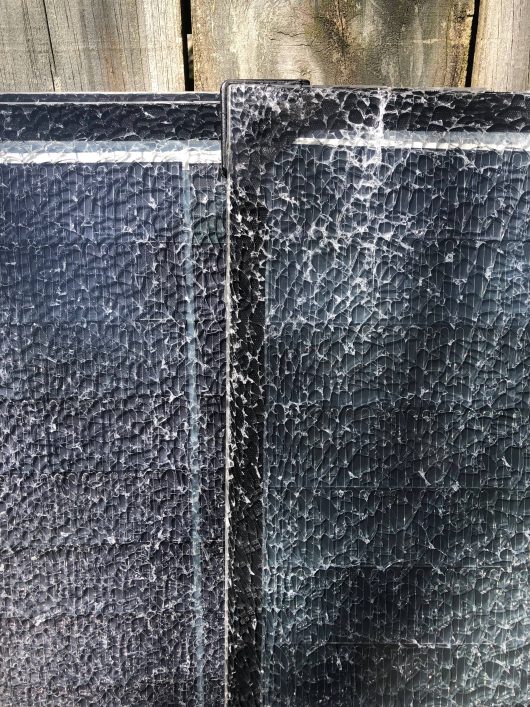
6. Smashed panels
The front glass panel of a solar module represents the first line of defence against the weather elements, like rain, dust, hail, and the occasional stray golf ball.
An ideal glass should be strong enough to withstand reasonable stresses like hailstones and golf balls while allowing sunlight to be absorbed by solar cells.
If an understrength glass is broken, not only the light absorbed by the panel will diminish, foreign elements such as water and dust can go under the glass to shade solar cells and impact energy output.
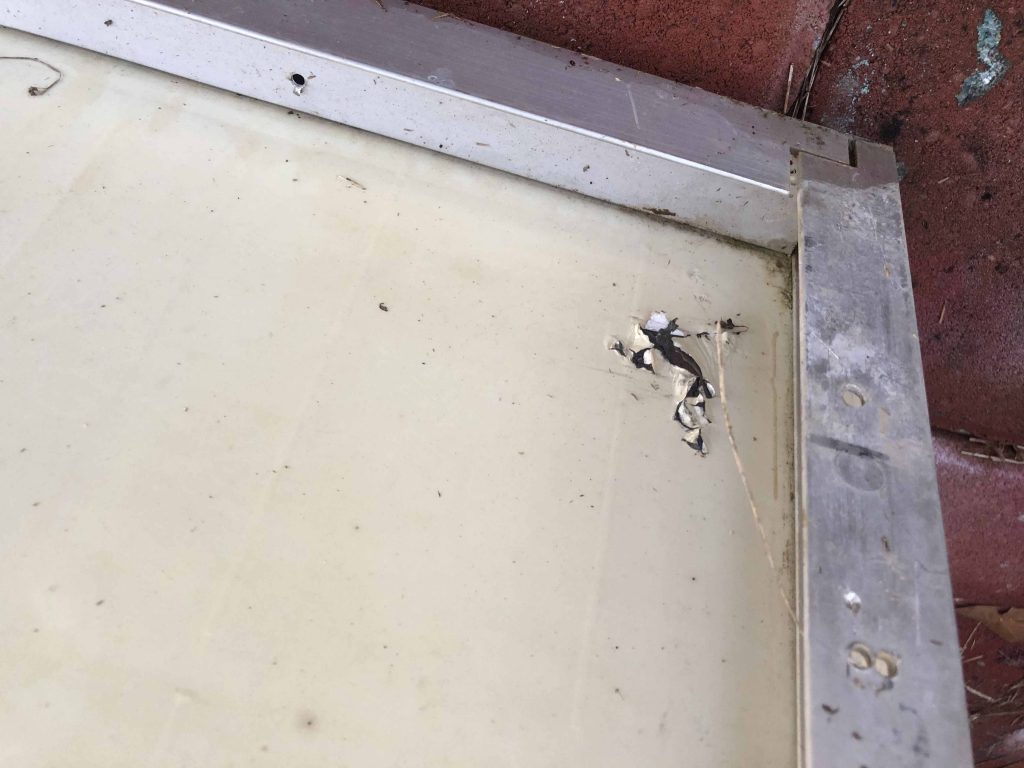
7. Scratched/Damaged Plastic on back of panel
The plastic on the back of the panel is very delicate and can be easily damaged.
This damage can be a source of moisture entering the panel.
If the panel is not overly damaged and is still functioning, you may possibly be able to seal up the damaged area with some silicone caulk.